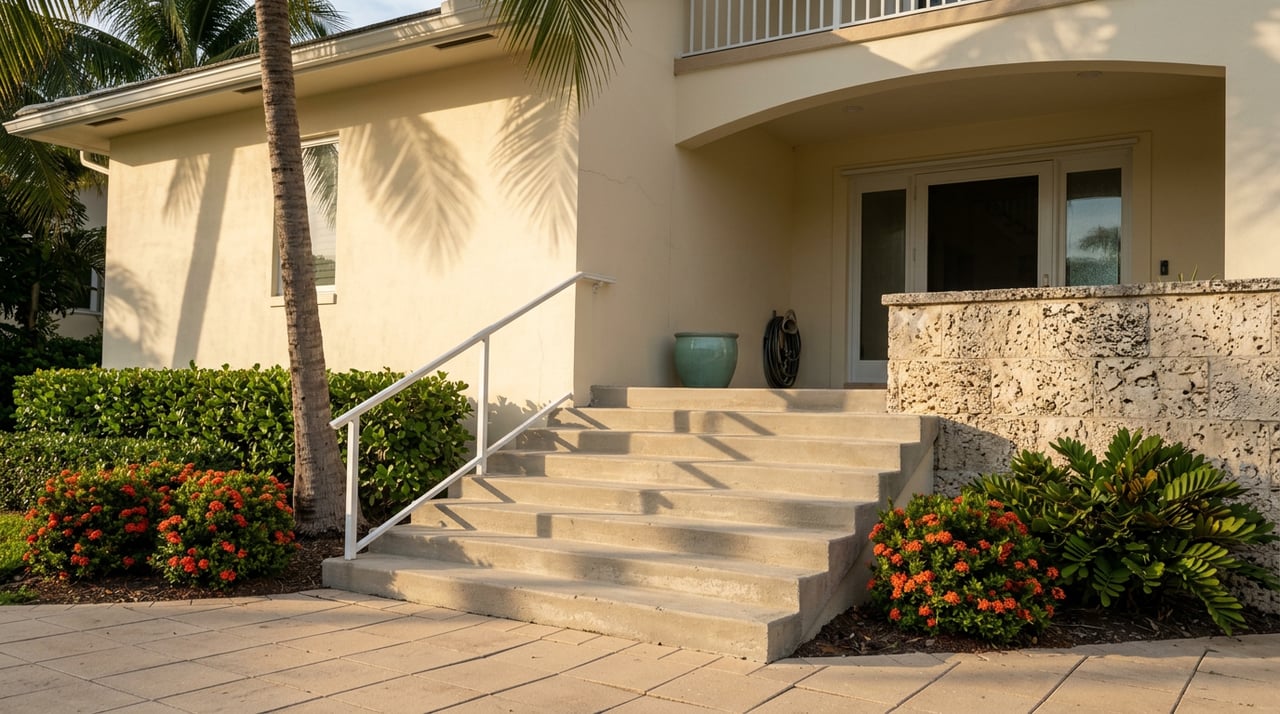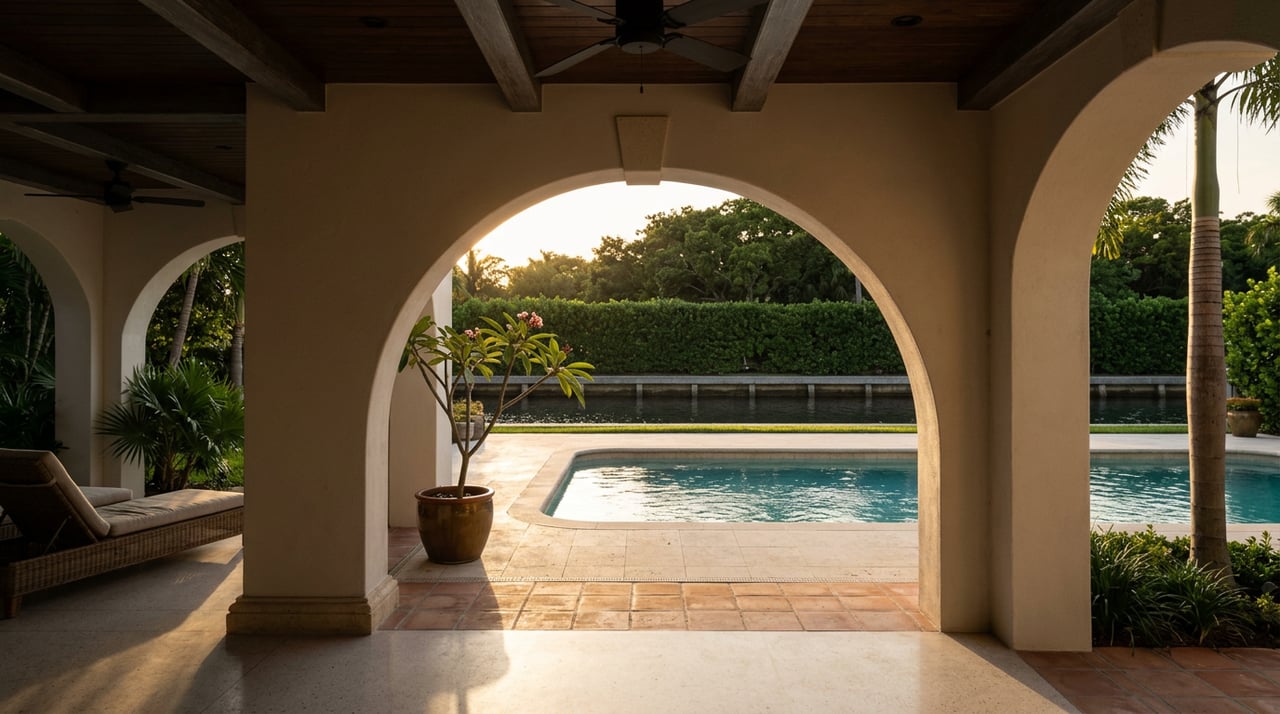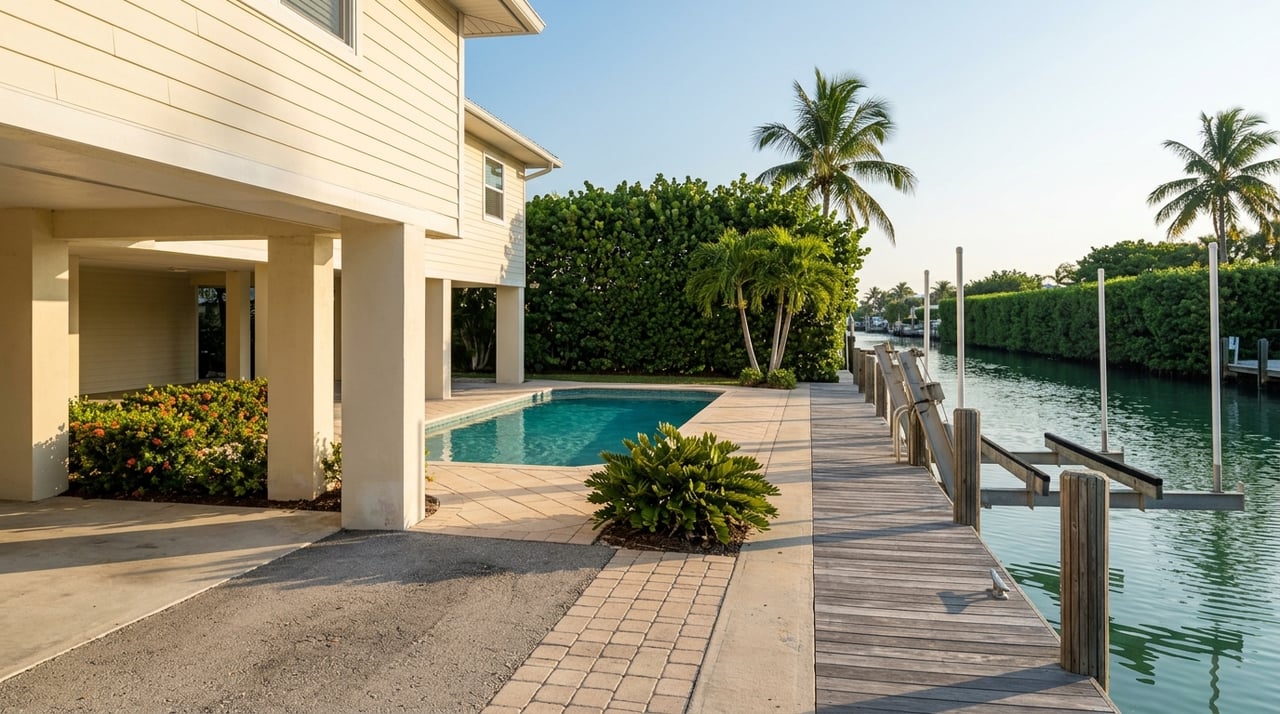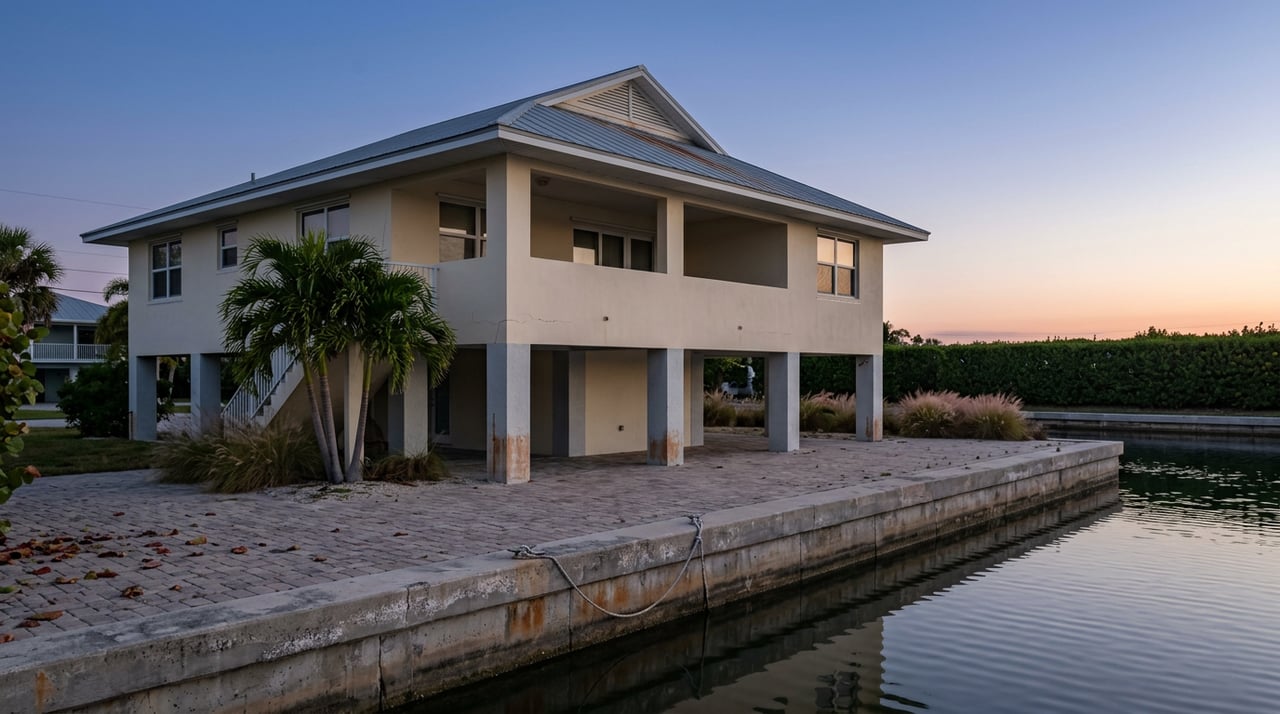
Two lots on Big Pine Key can look nearly identical on paper. Same island, same Tier classification, same rough acreage, similar canal access. Yet one sells because a buyer can start digging a foundation next month, and the other sells because a buyer is betting on a process that, as of this year, nobody at the county, the state, or the federal level can fully describe yet.
The difference shows up in real listings right now. One current Big Pine Key offering pairs a vacant lot with an already-approved ROGO allocation and an active building permit for a 1,320-square-foot modular home, permit number SFDUP-2023-0113, approved in February 2025 and ready to be picked up. The buyer isn't purchasing land. They're purchasing a finished decision. Down the road, a comparable vacant parcel carries only a Tier 2 designation and a note that the buyer should verify point eligibility with the county before assuming anything. That second listing isn't lying. It's just honest about the fact that "buildable" on this particular island is currently a moving target, and the target moved again this year.
The Rulebook That Just Expired
Big Pine Key and adjoining No Name Key have operated under a permitting arrangement unlike anywhere else in the Florida Keys since the early 2000s. The Big Pine Key/No Name Key Habitat Conservation Plan, paired with a federal Incidental Take Permit issued by the U.S. Fish and Wildlife Service, governed how many homes could be built and where, in exchange for protections for the Key deer, the Lower Keys marsh rabbit, and the eastern indigo snake, all of which share these two islands with the people who live on them.
That HCP expired in 2023. The ITP that accompanied it received a three-year extension to bridge the gap, but that extension itself ran out on June 30, 2026. Monroe County has since moved permitting on both islands into a broader federal review, the Permit Referral Process, tied to a Fish and Wildlife Service biological opinion originally built around FEMA's flood insurance program. The transition took effect July 1, 2026, and the county has said publicly that maximum limits on species impacts set under the old framework still apply while the new one gets written into local code.
That's the county's position. It is not yet universally agreed upon.
Why This Island Plays by Different Rules to Begin With
Most of the Keys ration new construction through the county's Rate of Growth Ordinance, a competitive points system tied to hurricane evacuation capacity. Big Pine Key and No Name Key layer a second system on top of it, the land Tier classification, created specifically because of the concentration of protected species here.
| Tier | What it means | What it means for a buyer |
|---|---|---|
| Tier I | Land judged most important to endangered species habitat | Earns zero ROGO points on its own and is capped at no more than one residential allocation every two years islandwide |
| Tier II | Transitional land, a designation that exists only on these two islands | Earns 10 ROGO points, still short of the threshold most applications need to compete |
| Tier III | Already-developed, infrastructure-served infill land | Earns 20 ROGO points, the closest to a straightforward path to a permit |
A Tier III lot near U.S. 1 and a Tier I lot a few streets away are not interchangeable investments even if both are labeled "vacant residential." One is close to the finish line. The other may need years of point accumulation, land dedication to the county, or a long wait on an allocation list before a shovel goes in the ground.
The Math Nobody Puts in the Listing Description
Where most of unincorporated Monroe County spreads its market-rate building allocations across quarterly cycles, Big Pine Key and No Name Key share a separate, much smaller pool. Multiple local sources describing the program put the annual total at just two market-rate permits and one affordable-housing permit for the entire combined area of both islands, a fraction of what gets issued elsewhere in the county in a single quarter.
A Tier III application generally needs around 30 points to be competitive, and the base Tier designation only gets an applicant to 20. The remaining points typically come from land dedication, donating another vacant parcel to the county, or from accumulating so-called perseverance points simply by waiting on the list year after year. None of that shows up in a listing photo. It shows up in how long a property actually takes to become a home.
What Got Contested This Summer, and What Happens Next
Monroe County held a community meeting in May 2026 to walk residents through the HCP and ITP expiration, and a second meeting in August to introduce a text amendment carrying the transition into county code. Neither of those addressed the harder question: should the county go further and lock in protections beyond what the expired federal instruments required.
That question moved to its own dedicated forum on September 21, 2026, at a hybrid meeting held at the Marathon Government Center. The discussion followed joint comments submitted August 3 by four community organizations, Keys Last Stand, the Key Deer Protection Alliance, Save Our Key Deer, and Big Pine United, who argued that certain protections tied to the old HCP and ITP should be written independently into local law rather than left to depend on a federal instrument that has already lapsed once. Among the specific asks on the table:
- Preserving a 236-unit cumulative ROGO cap for Big Pine Key and No Name Key combined
- Maintaining the existing limit on new Tier I residential development
- Carrying forward the former HCP's cumulative habitat-impact ceiling and its mitigation provisions
- Holding new commercial floor area on both islands to a cumulative maximum of 47,800 square feet
Advocacy groups have also raised a more technical concern worth understanding if you're evaluating a specific parcel: some of what the county says it will enforce through the new federal process may not yet match language already sitting in the Land Development Code, which by law is what property owners are entitled to rely on. That gap, if it exists, is exactly the kind of detail a title search or a straightforward property listing will not surface on its own.
What the Asking Prices Are Already Telling You
None of this is theoretical for pricing. Active waterfront listings on Big Pine Key carried a median asking price near $899,000 as of late June 2026, with typical time on market running above four months, longer than the fast-turnover pace often associated with Keys waterfront generally. Some of that reflects ordinary seasonality and interest rate conditions shared across the region. But a meaningful share of Big Pine Key's inventory is vacant land or homes tied to rebuild potential, and for that segment, the permitting uncertainty this year is a real variable buyers are pricing in, whether they can articulate it or not.
A property that already carries a picked-up building permit is not competing on the same axis as a property that carries only a Tier designation and a suggestion to call the county. The first is priced against comparable finished construction. The second is priced against an open question, and open questions tend to sit longer and move less predictably than settled ones.
What This Means If You're Looking Here
None of this makes Big Pine Key a place to avoid. Its appeal, the pine rockland habitat, the National Key Deer Refuge, the quieter density than much of the rest of the Keys chain, exists precisely because these protections have shaped it for two decades. What it does mean is that due diligence here has an extra layer most other Keys neighborhoods don't require.
Before treating any vacant parcel's Tier designation or ROGO status as settled, it's worth confirming three things directly with the county: the current Tier Map designation for the specific parcel, whether any ROGO allocation and building permit are already attached to the property or still pending, and whether the pending Land Development Code amendment, filed as 2026-128 in the county's planning system, has been adopted since a listing was written. A designation that was accurate in the spring may not describe the same rules by the time a contract closes.
A Few Straight Answers
Does this affect homes that are already built? No. The Tier system, ROGO, and the HCP/ITP transition govern new construction, substantial improvements, and vacant land. An existing home with a valid certificate of occupancy is not retroactively affected by any of this.
Does this apply anywhere else in the Keys? No. The Tier II classification and the separate, smaller annual permit pool exist only on Big Pine Key and No Name Key, a structure created specifically because of the concentration of federally protected species there. The rest of unincorporated Monroe County runs on the standard ROGO cycle.
Are the two islands treated identically? Not entirely. Affordable housing allocations, for instance, can be used on Big Pine Key but not on No Name Key under current county code, one of several smaller distinctions worth confirming for any specific parcel.
Buying land or a rebuild candidate on Big Pine Key right now means buying into a process, not just a parcel. That's not a reason to walk away from an island with this much genuine character. It's a reason to want a local guide who reads the county's planning agenda as closely as the MLS. Island Welcome Real Estate works this market year-round and can walk you through what a specific Tier designation actually means for your timeline before you write an offer. Start Your Island Search when you're ready.