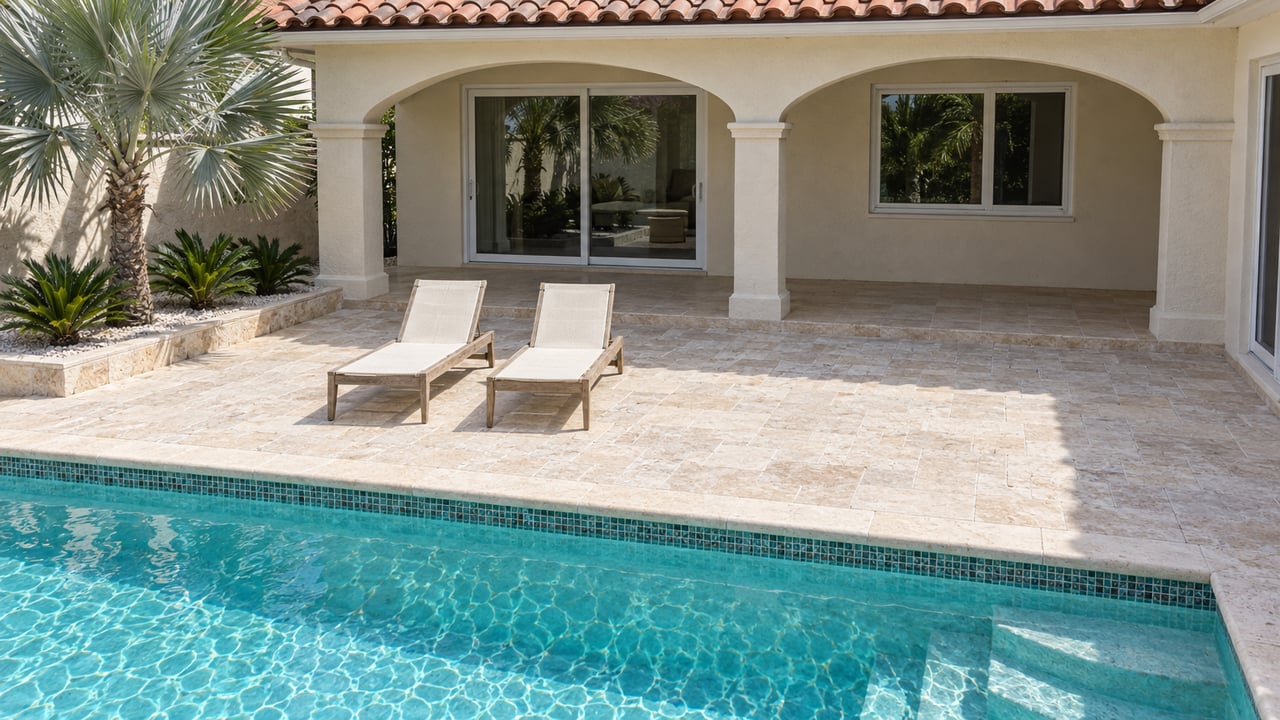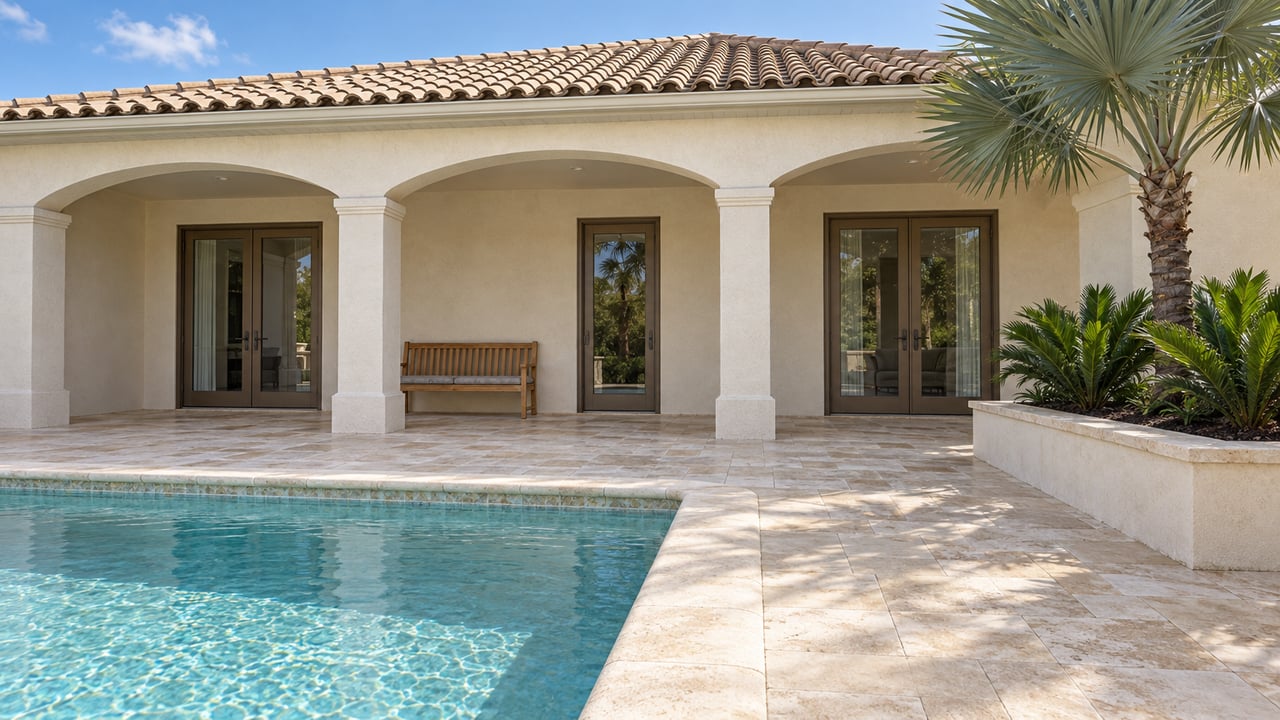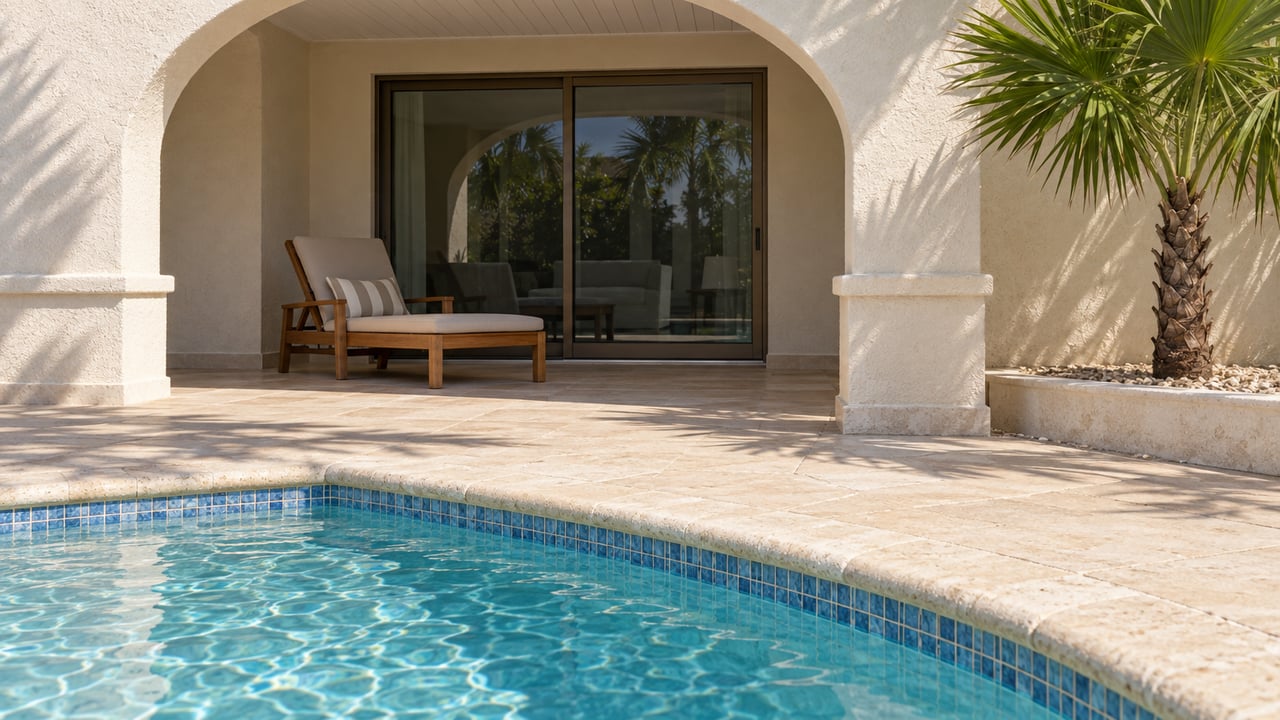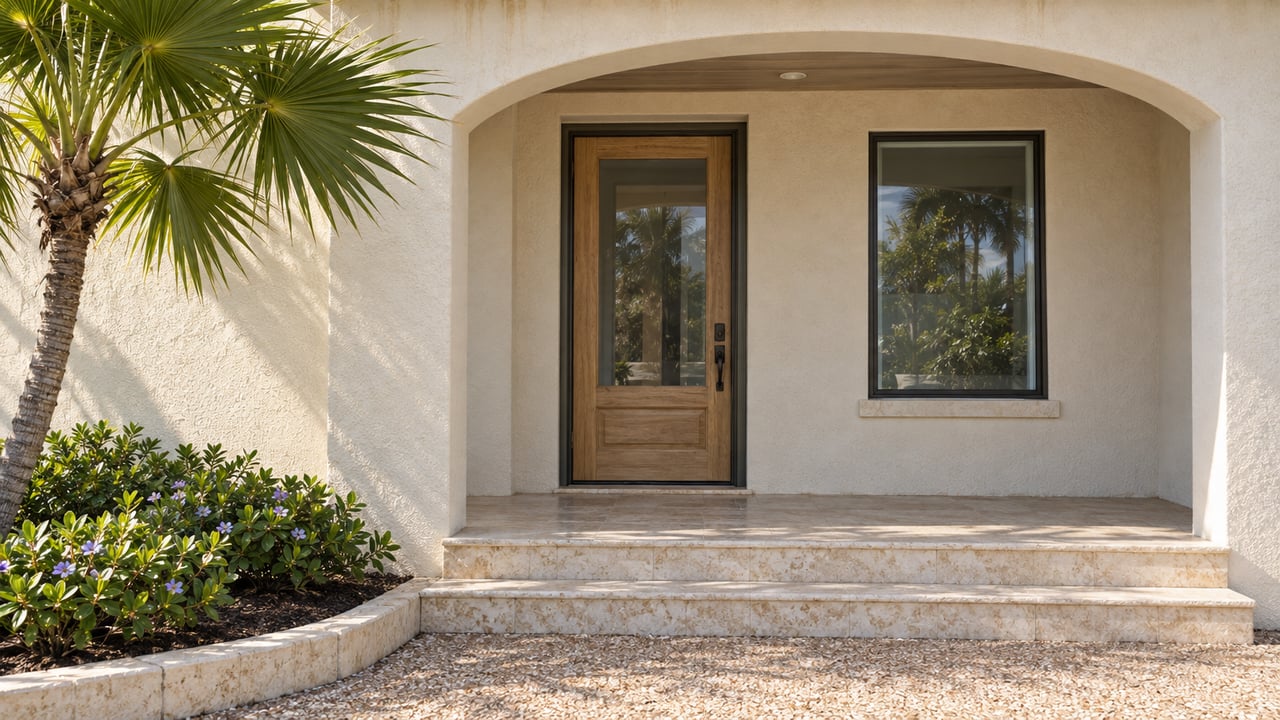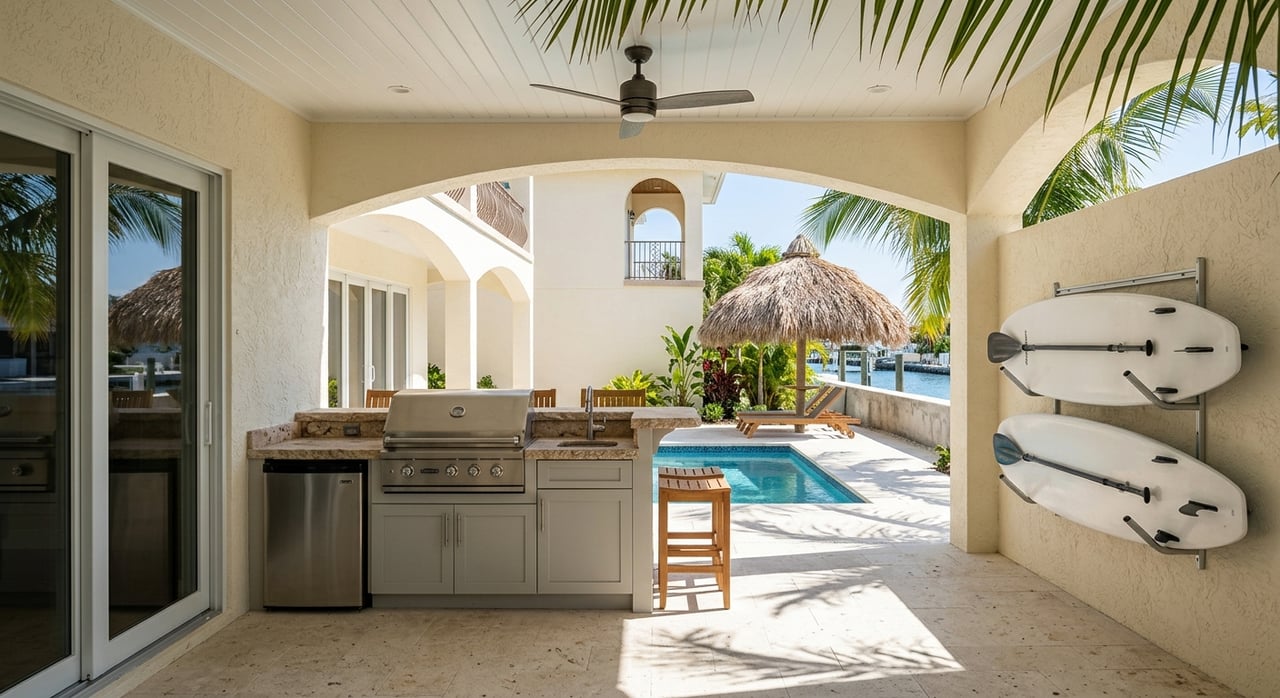
Dreaming about a pool deck, tiki lounge, or breezy outdoor kitchen on Sugarloaf Key? The idea sounds simple, but designing an outdoor living space here takes more than picking pretty finishes. Between salt air, strong sun, seasonal downpours, shoreline setbacks, and flood rules, the best spaces are the ones that feel relaxed because they were planned carefully. Let’s dive in.
Start With Sugarloaf Key Conditions
Sugarloaf Key is not a generic backyard market. The Florida Keys have a mild tropical-maritime climate, with annual average temperatures near 79°F and about 40 inches of rain, depending on the station. The drier stretch usually runs from December through April, while June through October brings roughly 65% of the annual rainfall.
For your outdoor space, that means comfort and durability should lead the design. Shade, airflow, drainage, and materials that can handle constant salt exposure matter from day one. Spaces that dry quickly and rinse easily usually make more sense than heavy, enclosed additions.
Build Around Airflow and Shade
In Sugarloaf Key, outdoor comfort often comes down to how well your layout works with sun and breeze. A space that feels open and shaded can be much more usable than one that looks impressive on paper but traps heat. Partial shade and cross-ventilation should guide your seating, dining, and cooking zones.
Think about how you move through the property too. If your home connects to a pool, dock, or grilling area, those paths should feel natural and stay usable after rain. Clear circulation helps your outdoor space feel easy, not crowded.
Smart Shade Options
Large enclosed structures are often less practical in this setting. Smaller, open-air shade elements tend to fit the climate and the code better. A compact gazebo-style retreat or tiki-inspired lounge can create a social hub without blocking the waterfront feel.
Monroe County allows a screened gazebo in the shoreline setback in some cases, but it must be detached, limited to 200 square feet, and no taller than 12 feet at the roof peak. That makes modest shade structures a more natural fit than oversized attached pavilions.
Plan a Layout That Fits Waterfront Lots
On Sugarloaf Key, one of the biggest design limits is the shoreline setback. On waterfront and canal-front parcels, what you can build near the water depends less on style and more on county rules. Pools and spas on altered canal shorelines must be set back at least 10 feet from the mean high water line, and open-water sites often face larger setbacks.
That is why many of the most successful outdoor living spaces here are compact and layered. Instead of one large outdoor room, think in separate but connected zones that each do a clear job.
A Practical Waterfront Layout
A strong layout often includes:
- a pool or spa zone for cooling off and relaxing
- a shaded lounge area that acts as the social center
- a food prep or outdoor kitchen area set away from splashing and foot traffic
- a gear storage and cleanup zone for boating, fishing, or pool use
This approach keeps the property visually open while making everyday use easier. It also helps preserve the waterfront character instead of filling it with bulky structures.
Keep Storage and Cleanup Intentional
Storage can make or break a waterfront outdoor space. On Sugarloaf Key, it is better to plan storage from the start than to let paddleboards, fishing gear, pool supplies, and hoses collect around the yard. A clean layout feels more upscale and functions better over time.
Monroe County allows only limited enclosed items in the shoreline setback, including a dock box up to 5 feet high. Pools, spas, fish-cleaning tables, and similar pollutant sources also may not discharge directly into surface waters, so rinse stations and cleanup areas should be designed thoughtfully.
What Works Best
The most workable storage ideas are usually low-impact support elements, such as:
- a permitted dock box near the water
- a screened enclosure where allowed
- elevated storage that complies with flood requirements
- a dedicated rinse area for gear and cleanup
When these features are built into the plan, your yard feels calmer, cleaner, and more useful.
Choose Materials for Salt and Storms
Beautiful finishes do not stay beautiful for long if they are not suited to the Keys. Salt spray, humidity, bright sun, and periodic heavy rain can wear down outdoor materials quickly. That is especially true for metal components.
FEMA notes that salt spray from breaking waves and onshore winds can significantly accelerate corrosion of metal fasteners and connectors in coastal areas. For pergolas, railings, outdoor kitchens, tiki frames, and dock-adjacent fixtures, corrosion-resistant hardware and regular maintenance are a smart move.
Material Priorities to Consider
When planning your outdoor living space, focus on materials and details that support long-term use:
- corrosion-resistant hardware and connectors
- finishes that can be rinsed easily after salt exposure
- surfaces that drain quickly after rain
- layouts that avoid standing water near seating or cooking areas
The goal is not just to create something attractive. It is to create a space that still looks and works well after seasons of sun, wind, and salt.
Use Landscaping That Belongs Here
The best planting plans on Sugarloaf Key look natural to the site and can handle coastal conditions. UF/IFAS recommends salt-tolerant plants for properties near saltwater coasts, especially those close enough to receive salt spray. Even then, these plants still need fresh water during establishment.
For many outdoor living spaces, lower, tougher, native or adapted coastal plants are the most practical choice. They soften hardscape, help define space, and reduce the high-maintenance look that can feel out of place near the water.
Coastal Plants to Know
UF/IFAS highlights several options that fit this kind of environment, including:
- beach sunflower
- gopher apple
- sea oats
- railroad vine
- silver buttonwood
- saw palmetto
Gopher apple is noted for very high salt-spray tolerance and suitability for dry, sandy coastal sites. Silver buttonwood is described as tough and drought-tolerant for South Florida sun. Saw palmetto is highly salt-tolerant and can work well as a privacy hedge or foundation planting.
Respect Drainage and Stormwater
A great outdoor space should handle a sunny afternoon and a summer downpour with equal ease. Monroe County expects stormwater to stay on site rather than run off into surface waters. That makes grading, runoff management, and permeable site thinking part of the design process.
If water collects around seating, cooking equipment, or walkways, the space becomes harder to enjoy and harder to maintain. Quick-draining surfaces and practical grading can help your yard recover faster after rain while supporting the site’s long-term performance.
Understand Permits Early
One of the biggest mistakes homeowners make is treating the outdoor living area as the easy part of the project. In the Keys, it often is not. Monroe County’s Building Department says permits must be obtained before construction begins, and plan review may involve planning, environmental, structural, plumbing, mechanical, electric, floodplain, and fire review.
That means your pool deck, gazebo, outdoor kitchen, or support structure should be thought through early. Depending on the project, outside agencies may also need to approve the work. Planning ahead helps you avoid redesigns later.
Flood Rules Matter More Than You Think
Floodplain rules are a major part of building responsibly in Sugarloaf Key. Monroe County says structures built after December 31, 1974 must have the lowest floor elevated to or above base flood elevation. The county also notes that in a Special Flood Hazard Area, substantial improvement or substantial damage may trigger current standards under the 50 percent rule.
This matters for outdoor living because many homeowners look at the area under an elevated home and imagine an extra lounge, game room, or pool room. Monroe County states that enclosed space below elevated homes is limited to access, parking, and limited storage, not habitable living space.
What This Means for Your Plan
Before you finalize a design, it helps to confirm:
- whether your lot has shoreline setback constraints
- whether your project falls within a Special Flood Hazard Area
- what uses are allowed below the home
- whether your planned structures need detached, open-air, or size-limited designs
These are not small details in the Keys. They shape what is possible and what adds lasting value.
Design for Lifestyle and Resale
A well-planned outdoor living space can do more than improve daily life. It can also support how buyers see and use a Sugarloaf Key property, especially in a market where waterfront living, dock access, and outdoor entertaining carry real appeal.
Spaces that feel easy to maintain, visually open, and clearly suited to island life often leave a stronger impression than overbuilt designs. Buyers looking in the Lower Keys often pay close attention to practical waterfront features, outdoor flow, and how well a property fits the setting.
For sellers, that means thoughtful outdoor design is not just a personal upgrade. It can become part of the property’s story. For buyers, it is one more reason to look beyond finishes and understand how a home truly lives on the water.
If you are buying or selling on Sugarloaf Key, outdoor living is part of the value conversation. The team at Island Welcome Real Estate can help you evaluate how waterfront features, lot constraints, and lifestyle details fit into the bigger picture.
FAQs
What climate factors matter most for outdoor living spaces on Sugarloaf Key?
- Strong sun, humidity, salt exposure, seasonal heavy rain, and frequent breezes all affect how outdoor spaces should be designed and maintained.
What setback rules affect waterfront outdoor design on Sugarloaf Key?
- Monroe County shoreline setback rules can limit where pools, spas, gazebos, and other accessory structures may go, with canal-front and open-water lots facing different requirements.
What kind of shade structure works best near the water on Sugarloaf Key?
- Smaller open-air structures, such as compact tiki-style or gazebo-style shade areas, are often more practical than large enclosed additions and may fit county rules more easily.
What plants are suitable for Sugarloaf Key outdoor spaces?
- UF/IFAS identifies salt-tolerant coastal plants such as beach sunflower, gopher apple, sea oats, railroad vine, silver buttonwood, and saw palmetto as useful options for coastal sites.
Can you turn the area below an elevated home into outdoor living space on Sugarloaf Key?
- Monroe County says enclosed space below elevated homes is limited to access, parking, and limited storage, not habitable living space.
Do outdoor living projects on Sugarloaf Key need permits?
- Yes. Monroe County says permits must be obtained before construction begins, and plan review may involve several departments depending on the project.