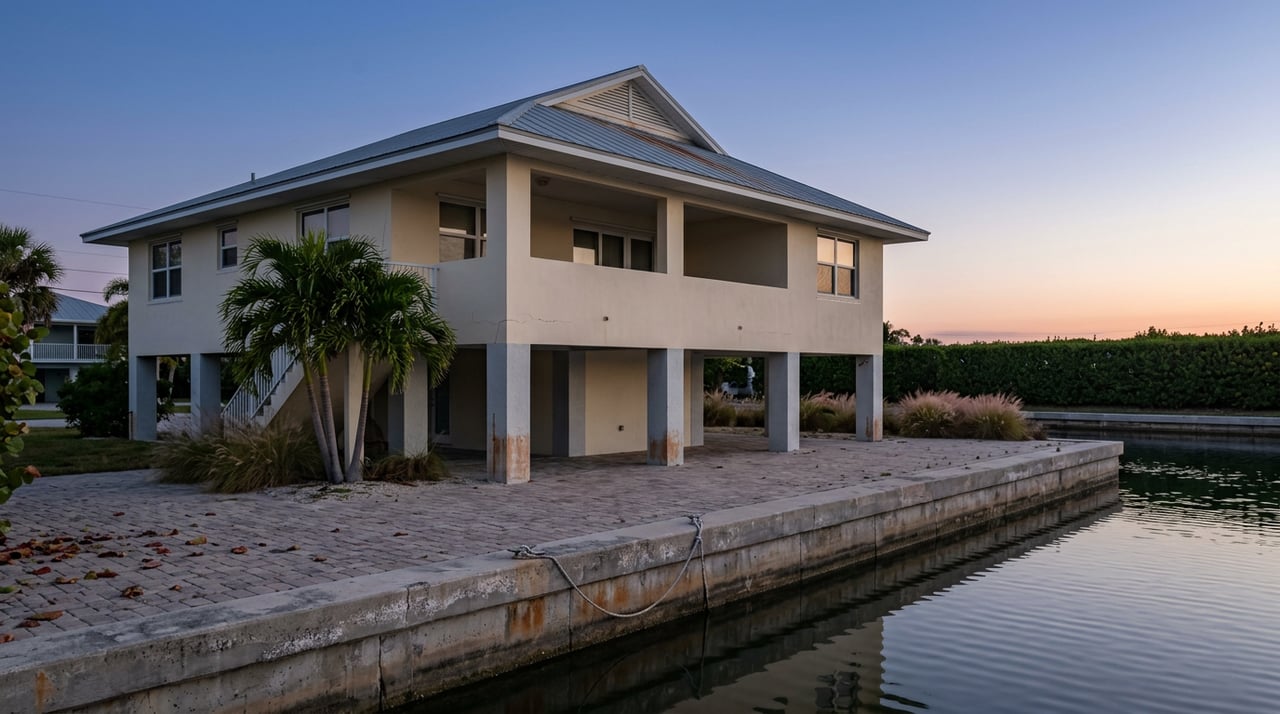
How many times have you passed mile marker 23 without slowing down? The building at 23801 Overseas Highway doesn't ask for attention. No sign screaming for a photo, no crowd of rental cars in the lot. But behind that unremarkable front sits one of the more significant coral restoration operations in the world, and this spring it got a lot bigger.
The place is called Summerland Farms, and it's the working nursery of the Plant A Million Corals Foundation. If you've lived on the island a while, you've probably heard the name in passing, maybe seen a volunteer sign-up flyer at the grocery store. What you may not know is that the technique invented at this address, on this key, has been covered by the New York Times, Forbes, and the World Economic Forum, and that on May 24, 2026, the foundation cut the ribbon on a greenhouse expansion built to double what the site can grow.
What's Actually Growing Behind That Building
Plant A Million Corals was founded by Dr. David Vaughan, a marine biologist who developed a process called micro-fragmentation. The short version: instead of waiting years for a slow-growing coral colony to expand naturally, technicians cut healthy donor coral into tiny pieces, at least three polyps each, using diamond-blade saws, then mount the fragments on tiles in custom saltwater tanks. The stress of being cut triggers a growth response, and the fragments grow back 25 to 40 times faster than they would on the reef.
The tanks themselves are part of the story. Facility manager Jason Smause has said the team builds their own acrylic tanks in a day or two, at a fraction of the cost of the fiberglass tanks the restoration industry usually relies on. That cost efficiency is a big part of why a nonprofit based on a two-lane highway in the Lower Keys can run a nursery capable of housing tens of thousands of coral fragments at once, all powered by solar and fed by custom flow-through systems that keep water temperature, salinity, and light within tight ranges.
Before this year's expansion, the site was already housing more than 50,000 coral fragments, a number confirmed on the foundation's own site. That's not a lab shelf of samples. That's a working farm of reef tissue, grown for the specific purpose of being put back in the ocean.
The Expansion Nobody Put on a Billboard
The greenhouse expansion that finished this spring was built to add space for up to 100,000 more coral fragments, according to Keys Weekly's coverage of the May 24 event, effectively doubling the site's total capacity. Ocean advocates, community leaders, and residents gathered that afternoon for tours of the new solar-powered systems and a demonstration of the micro-fragmentation process in action.
Dee Dee Vaughan Smause, the foundation's co-founder and Vaughan's daughter, described watching the expansion move from concept to something residents could walk through. She said it gave the team "the actual space and tools to match the scale of what our oceans are facing." Her father put it more bluntly, calling the new infrastructure a "game-changer" for shielding fragile coral species from the wild temperature swings that have battered the reef tract in recent years.
That framing isn't exaggeration for a ribbon-cutting crowd. The reef systems just offshore, including Looe Key, have been through a rough stretch. Summer 2023 brought the hottest ocean temperatures ever recorded in the Keys, in the longest marine heat wave on record, and some nearby restoration nurseries reported total mortality from heat stress rather than gradual bleaching. A land-based facility that can pull coral out of open water and grow it under controlled conditions isn't a nice-to-have anymore. It's insurance.
What the Fundraiser Actually Paid For
The afternoon of tours gave way to an evening fundraiser, and this is where the number that stuck with me comes in. According to Keys Weekly, a single $1,000 donation funds an entire tank, which holds about 1,100 micro-fragmented coral pieces. That's the kind of math that makes an abstract cause feel concrete: not a general donation into a cause, but a specific tank, in a specific greenhouse, on a specific island, that you could go stand in front of next week.
The fundraiser happened at South of the Seven, the restaurant in Sugarloaf Shores that's become something of a recurring partner for the foundation's events. Smause called the community's response at that fundraiser emotional, and said every sponsored tank and auction bid goes straight into daily operations, growing the heat-tolerant corals the reef increasingly needs.
For several years, the foundation has also worked with the local marine conservation group CoastLove on a mangrove propagule program run out of the same site, since mangroves do their own quiet work protecting shorelines and filtering water. It's one more reason this stretch of highway does more environmental heavy lifting than its plain exterior suggests.
How to Actually Walk In
The tours are free, and they're open to individuals, families, schools, and groups, not just researchers with credentials. A few practical notes if you want to see the greenhouses yourself:
- Tours run Monday through Friday, 9 a.m. to 4 p.m., with weekend visits available by request.
- Groups of 10 or more should book at least two weeks ahead.
- The address is 23801 Overseas Highway, Summerland Key, FL 33042, roughly 25 miles up the road from Key West at mile marker 23.
- Reach the foundation directly at [email protected] to schedule a visit.
There's no admission fee, no gift shop upsell, no reservation platform to fight with. You email, they confirm within a couple of business days, and you show up.
Why This Belongs on Your Radar, Not Just a Diver's
It's easy to assume coral restoration is something that happens underwater, invisible to anyone who isn't certified to dive. Summerland Farms breaks that assumption. The whole point of the land-based model is that you don't need a wetsuit to see it. You need a Tuesday afternoon and a willingness to pull off the highway at a building you've probably driven past a hundred times without a second look.
The foundation's stated goal is to produce a million corals a year, using this site partly as proof that large-scale coral restoration doesn't require the kind of budget only a university or government agency could manage. Whether or not that number is ever hit, what's already sitting behind that building on your own island has drawn attention from the New York Times and the World Economic Forum, and it just got twice as big as it was a year ago.
Next time you're heading toward Big Pine or doubling back from a grocery run in Cudjoe, mile marker 23 is worth the five minutes it takes to notice it.
If you're weighing what life on Summerland Key actually looks like day to day, from the highway you drive to the water behind your dock, Island Welcome Real Estate knows this stretch of the Keys well enough to talk you through all of it.