Thinking about buying or selling in Big Pine Key and wondering whether concrete block or wood frame is the smarter move? In the Keys, the choice affects more than style. It touches wind performance, flood rules, insurance, and long-term upkeep. This guide breaks down how each construction type behaves in our island conditions so you can choose with clarity. Let’s dive in.
Big Pine Key hazards
Big Pine Key sits in a coastal, low-lying environment with exposure to hurricanes, storm surge, flooding, salt spray, and high winds. These hazards shape how homes should be built and maintained. If you want to visualize local water risk, explore the NOAA Sea Level Rise Viewer.
The most important takeaway: both concrete and frame homes can work here when they are elevated and built to code. The site, flood zone, and elevation above Base Flood Elevation are key for risk and insurance.
Code, flood maps, and elevation
The Florida Building Code sets the standard for wind and coastal construction throughout the Keys. You can review statewide code resources on the Florida Building Code website. Locally, Monroe County enforces permitting and coastal rules. Before you buy, sell, or plan work, check the Monroe County Building Division for permits and requirements.
Every Big Pine Key property has a FEMA flood zone designation. Confirm the zone and mapping on the FEMA Flood Map Service Center, and request the property’s current Elevation Certificate. Elevation drives flood insurance pricing and rebuild options. In some coastal areas, state rules and control lines may add limits on placement and design. For those details, see the Florida DEP’s Coastal Construction Control Line program.
Concrete vs frame basics
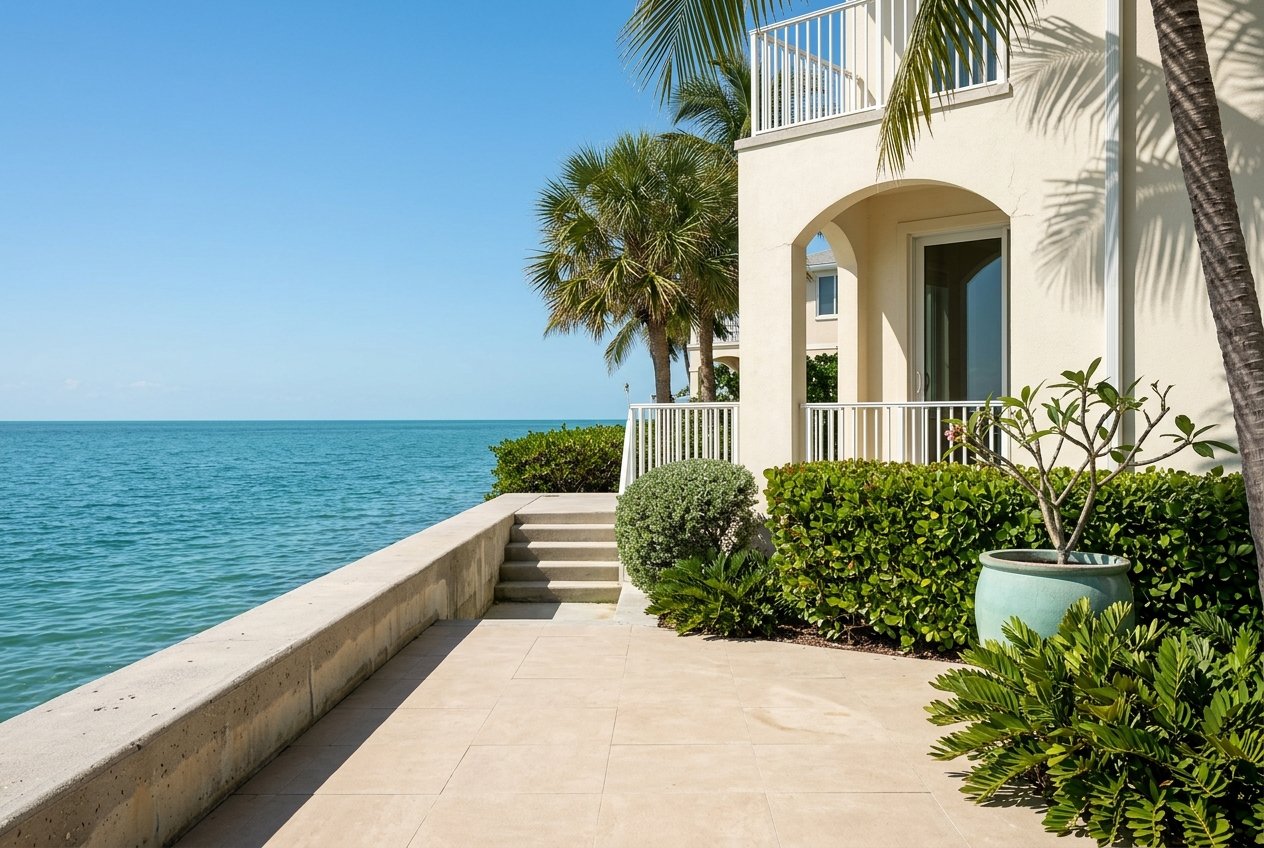
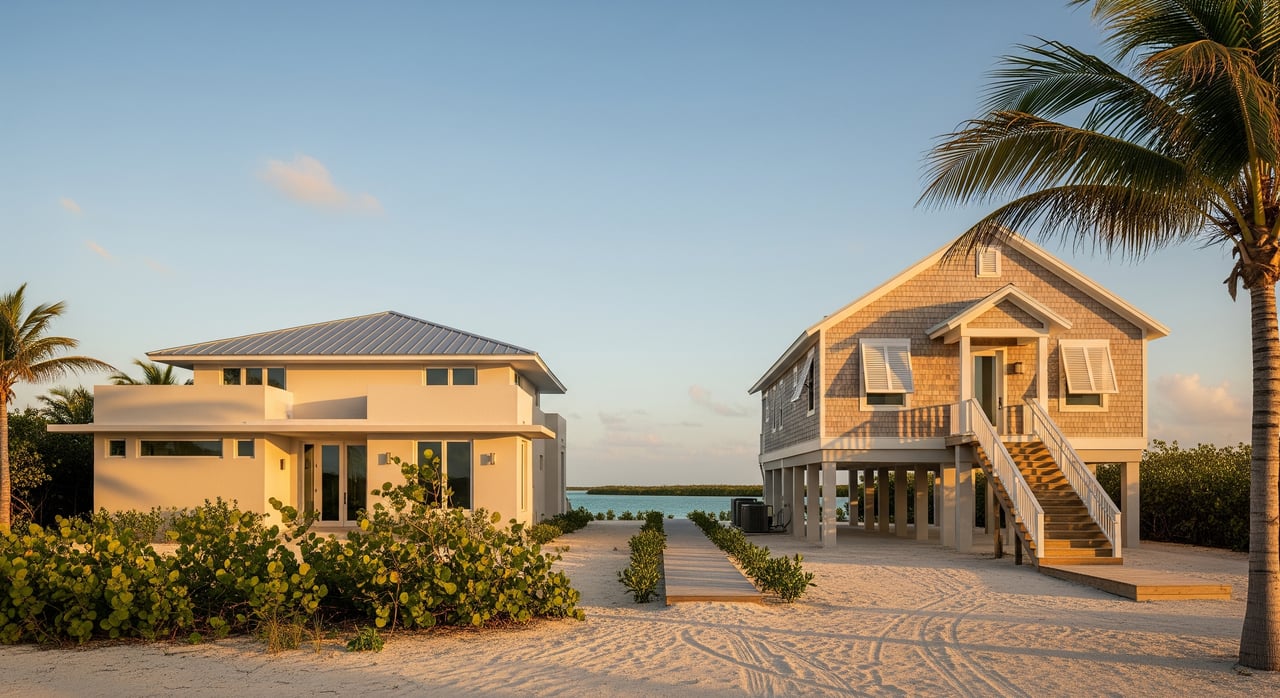
Concrete-based homes in the Keys often use concrete block (CMU), poured-in-place concrete, or insulated concrete forms (ICF). These systems create stiff, heavy walls with good resistance to wind-borne debris when combined with impact protection at openings. You will also see concrete or concrete-capped pilings to elevate living areas above flood.
Wood-frame homes use dimensional lumber or engineered wood. In the Keys, most are elevated on pilings or piers. Many classic stilt cottages are frame construction, which can be faster to build and easier to modify. With either type, the foundation, roof connections, and openings protection are critical.
Wind and impact performance
In general, concrete walls handle lateral wind loads and debris impacts well when reinforced and detailed correctly. Wood-frame homes can also meet modern wind design if they use proper connectors, hurricane straps, and impact-rated windows or approved shutters. The key is the integrity of the load path from roof to foundation.
For both types, the roof often dictates how a home rides out a storm. Strong roof-to-wall connections, proper decking attachments, and approved coverings reduce the chance of failure. Impact-rated openings or certified shutters are essential for debris protection and can support insurance discounts.
Flood and under-house design
Elevation is the first line of defense in Big Pine Key. Whether your walls are concrete or wood, keeping finished living space at or above the required elevation is vital. In zones with wave action, designs may require open lower levels or breakaway walls. Enclosures below the living area must comply with venting and hydrostatic pressure rules.
Concrete can better tolerate water exposure in non-living areas, but heavy walls below required elevations may be restricted in certain zones. Wood below flood levels is vulnerable to rot and mold after inundation. Plan storage, parking, and mechanical placement with flood in mind.
Salt, pests, and maintenance
Salt air affects both materials. Concrete that is not detailed for marine exposure can experience reinforcing steel corrosion. Proper concrete cover, mix design, and protected rebar improve durability. Wood-frame homes rely on metal connectors and fasteners that should be stainless or hot-dip galvanized, and lumber should be pressure-treated.
Termites and rot are ongoing considerations for wood assemblies. Regular inspections, barriers, and treatments help manage risk. Concrete walls resist termites and rot in the wall assembly itself, though doors, trim, and interior finishes still require care. Across both types, use corrosion-resistant materials for roofing, HVAC, and exterior metals.
Insurance and financing
If your property is in a mapped flood zone and you have a federally backed mortgage, flood insurance is typically required through the National Flood Insurance Program or a private carrier. Details on documentation and ratings are available through FEMA resources, including Elevation Certificates. Underwriting in Florida also involves wind coverage, which can be available through private insurers or the state’s insurer of last resort, Citizens Property Insurance.
Wall type matters, but insurers also weigh roof condition, elevation, openings protection, and prior claims. You can explore statewide insurance oversight resources via the Florida Office of Insurance Regulation. Homes that meet recognized resilience standards, such as the IBHS Fortified program, may qualify for mitigation discounts where available.
Costs and timelines
Upfront construction costs vary. In many Florida markets, concrete can run higher than light-frame wood, though in the Keys the cost gap can narrow due to local contractor experience with CMU and concrete. Elevation and pilings are major drivers of cost regardless of wall type. Site access, lot size, and coastal rules also affect budgets and schedules.
After storms, the availability of local trades affects repair timelines. Frame repairs can be quicker in some cases, while specialized concrete repairs may require different crews. The best way to reduce future costs is to focus on elevation, roof quality, and openings protection at the time of purchase or renovation.
Comfort and energy
ICF and insulated concrete block can provide thermal mass and energy benefits when paired with proper insulation and air sealing. Wood-frame walls can also reach high efficiency with good insulation, air control, and window performance. In our climate, long-term comfort depends most on insulation strategy, tight construction, window quality, shading, and HVAC design rather than wall material alone.
Buyer and seller checklist
Gathering the right documents early keeps deals smoother and strengthens your negotiating position. Use this list for Big Pine Key:
- Current FEMA flood zone and recent Elevation Certificate.
- Monroe County permits for original construction and major renovations.
- Roof age and material, plus wind-mitigation features and attachments.
- Openings protection: labels for impact windows or certified shutters.
- History of flood or wind damage and repairs with permits and invoices.
- Insurance history: recent wind and flood premiums, claims, and inspections.
- Foundation type photos and notes: pilings, piers, and under-house condition.
- Evidence of corrosion protection: epoxy or stainless rebar for concrete; stainless or hot-dip galvanized connectors and termite mitigation for wood.
Questions to answer when evaluating a property:
- What is the finished floor elevation relative to the required elevation?
- Is the site in a coastal high-hazard V-zone or an AE/other flood zone?
- How old is the roof and how are roof-to-wall connections documented?
- Are windows and doors impact-rated or protected by certified shutters?
- For concrete: what rebar and mix protections were used for marine exposure?
- For wood: what termite systems and corrosion-resistant hardware are present?
- What mitigation standards or certifications, such as IBHS Fortified, are documented?
Which is right for you?
If you want ultra-solid walls, low termite risk, and potentially favorable wind underwriting, a concrete home may be a good fit. If you prefer lighter construction, faster modification, or the classic Keys stilt-cottage aesthetic, a well-built frame home can also perform well when elevated and mitigated.
Focus on three priorities and you will be set:
- Elevation: Keep living areas above required levels based on current maps.
- Roof and openings: Invest in strong roof attachments and impact protection.
- Maintenance: Use corrosion-resistant materials and keep records current.
Ready for a property-by-property breakdown that includes elevation, flood zone, roof details, and expected insurance implications? Reach out to the local team that does this every day. We will help you compare concrete and frame options and connect the right home to your boating and island lifestyle.
For tailored guidance and listings that match your construction priorities, connect with Island Welcome Real Estate. We are here to help you move with confidence.
FAQs
Which construction type handles hurricanes better in Big Pine Key?
- Concrete walls generally resist wind and impact better when engineered correctly, but a modern, well-mitigated frame home with strong roof connections and impact openings can also perform well.
How does flood insurance work for Keys homes?
- Flood insurance requirements often depend on elevation relative to FEMA maps and your flood zone; the Elevation Certificate and mitigation features are major rating factors.
Do concrete homes always have lower premiums in the Keys?
- Not always; insurers weigh roof condition, elevation, openings, and claims history in addition to wall type, so results vary by property and carrier.
What about salt air and long-term durability?
- Concrete needs proper marine detailing to protect reinforcing steel, while wood needs stainless or hot-dip galvanized connectors and termite protection; both require ongoing maintenance.
What documents should I review before making an offer?
- Review the flood zone and Elevation Certificate, permits and code history, roof and mitigation records, openings protection labels, repair documentation, and recent insurance information.