Trying to choose between an HOA community and a non‑HOA home in Key Largo? You are not alone. Between boating access, rules, fees, and storm prep, the decision can shape your day‑to‑day life and long‑term costs. In this guide, you will learn how each option works in the Upper Keys, what to expect with docks and permits, how insurance and rentals differ, and a practical checklist to help you buy with confidence. Let’s dive in.
Key Largo basics for buyers
Key Largo sits in unincorporated Monroe County, where coastal rules and permitting have a direct impact on property use and improvements. For local regulations, building and planning, start with the official Monroe County Government site.
Flood and hurricane risk are part of island life. Lenders often require flood insurance if your home sits in a mapped flood zone. Learn more about maps and policy basics through FEMA. For hurricane tracking, preparedness, and seasonal updates, use the NOAA National Hurricane Center.
Water and wastewater services vary by neighborhood. Some streets are on central systems and others are not. Always confirm details for a specific parcel and connection requirements with the Florida Keys Aqueduct Authority.
How ownership types differ
Key Largo offers condominiums, planned communities with HOAs, gated developments, and single‑family homes outside associations. Each structure has different rules, responsibilities, and cost patterns.
Who sets the rules
- Condominiums operate under Florida Statutes Chapter 718. The association maintains common elements and enforces rules, while owners handle interiors.
- Homeowners’ associations follow Chapter 720. HOAs maintain common areas, set and enforce community standards, and may regulate exterior changes, parking, boats, trailers, and rental terms.
- Non‑HOA homes are governed by county codes and any recorded deed restrictions. You have more flexibility, but you also shoulder full responsibility for upkeep and compliance.
What the fees cover
- HOAs and condos collect assessments for maintenance, landscaping, insurance on common areas, and shared utilities. Some also have separate marina or slip fees.
- Special assessments can occur for big projects such as roof replacement, seawall work, or dredging.
- Healthy reserves matter. They help cover major repairs and support lending and resale when buyers and lenders review financials.
Boating and waterfront realities
For many Key Largo buyers, boat access drives the search. Depth, bridge clearance, canal maintenance, and slip availability shape daily use and long‑term value.
HOA marina life
- Amenities: Many associations offer shared docks, assigned slips, ramps, dry storage, pools, security, and on‑site management. These features can make second‑home ownership easier when you are away.
- Rules: Expect slip assignment systems, waitlists, boat length and draft limits, and hurricane protocols. Some associations restrict on‑lot boat storage or trailers.
- Costs: Marina fees are often separate from HOA dues. Ask about slip rates, guest policies, and any planned bulkhead or dredging projects that could trigger special assessments.
Private dock control
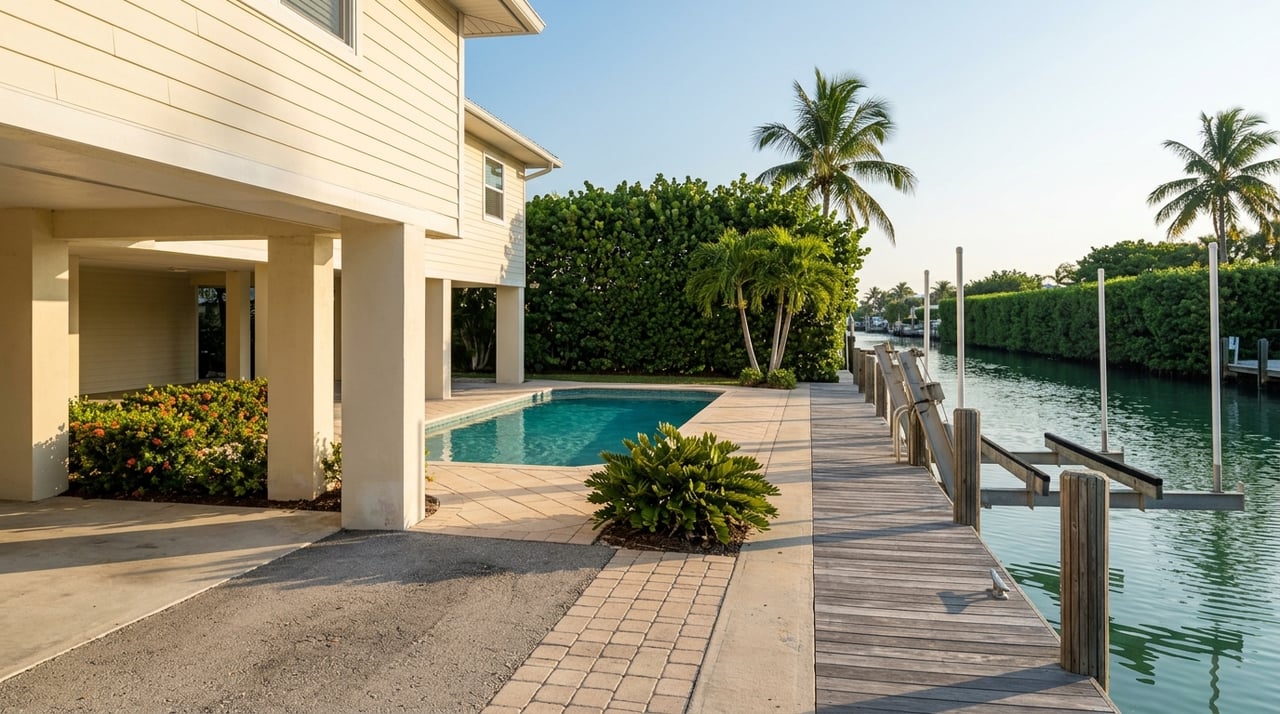
- Flexibility: A non‑HOA canal home with a private dock gives you more control over boat size, lifts, and storage, subject to county and state rules.
- Responsibility: You handle permits, maintenance, and storm preparation. Marine work in the Keys typically requires review by Monroe County and the Florida Department of Environmental Protection, and sometimes federal agencies.
- Practical checks: Confirm canal depth, draft at low tide, turning basin space, and run time to open water. Some canals are shallow or have low bridges that limit vessel type.
Insurance and risk in the Keys
Coastal risk influences both budget and financing. Understanding who insures what will help you compare HOA and non‑HOA options.
- Coverage types: Condo associations usually carry master policies for buildings and common elements. Unit owners carry interior coverage. In HOAs, owners insure their detached homes while the association insures common structures.
- Flood insurance: If your mortgaged home is in a mapped flood zone, flood coverage is typically required. Premiums depend on elevation, construction type, and mitigation features. Start with FEMA for program basics.
- Wind and hurricane: Policies often have separate wind deductibles. In higher‑risk areas, some owners may rely on carriers of last resort such as Citizens Property Insurance. Review association deductibles because large deductibles can lead to owner charges after a storm.
- Lender review: Loan approval can depend on association financial health, reserves, insurance limits, and any pending litigation.
Rentals and resale factors
Short‑term rentals are common in the Keys, but rules vary.
- County rules: Monroe County regulates short‑term rentals. Registration and taxes can apply. Check current requirements through county resources and verify details for a specific address on the county site.
- Association rules: HOAs and condos may set stricter limits than the county. Some communities prohibit short‑term rentals or require minimum lease terms and approvals. Always review governing documents before you buy.
- Resale and lending: Lenders and insurers assess association financials, reserves, delinquency rates, insurance coverage, and legal disputes. Strong documentation supports smoother financing and resale.
Utilities and wastewater checks
The Keys are environmentally sensitive, and wastewater rules are strict.
- Sewer vs septic: Some neighborhoods have central sewer. Others may have legacy systems with required upgrades. Confirm service, hookup status, and costs with the Florida Keys Aqueduct Authority.
- Water service: FKAA provides potable water to much of the Keys. Look into current service, fees, and any planned infrastructure work.
Pros and cons at a glance
Every buyer’s priorities differ. Use this quick lens to frame your search.
HOA or condo living
- Pros:
- Predictable exterior care and common‑area maintenance.
- Access to shared boating features and amenities.
- On‑site management simplifies second‑home ownership.
- Cons:
- Recurring assessments and potential special assessments.
- Rules for exterior changes, boat storage, and rentals.
- Slip sizes and availability can be limited.
Non‑HOA ownership
- Pros:
- More control over property use and customization.
- No HOA dues and fewer community rules.
- Direct control of private dock and lift decisions.
- Cons:
- You manage all maintenance, permits, and storm prep.
- Neighborhood upkeep varies and is less regulated.
- Private seawall and dredging costs fall on you.
Your Key Largo due‑diligence checklist
Use this list to compare individual homes and communities.
Ownership and governance
- Confirm whether the property is a condo, HOA, or non‑HOA.
- Review declarations, bylaws, budgets, reserve studies, insurance certificates, meeting minutes, and litigation disclosures.
Dockage and water access
- Verify slip ownership or lease terms and any waitlists.
- Confirm permitted boat length, beam, and draft. Ask about tidal impacts and low‑water conditions.
- Check who holds permits for docks and seawalls. Ask about upcoming seawall, bulkhead, or dredging projects.
Hazard exposure and insurance
- Ask about flood zone, elevation, and typical flood premiums for comparable homes.
- Review association master policy limits and wind deductibles.
Rentals
- Verify Monroe County rental requirements and any association limits on lease length and frequency.
Utilities and wastewater
- Confirm water provider, sewer connection status, and any required septic upgrades.
Financial health
- Ask about reserve balances, dues trends, special assessments, and delinquency rates.
Local marine services
- Note distance to fuel docks, public ramps, marinas, service yards, and hurricane haul‑out options.
Zoning and rebuild limits
- Ask about coastal construction lines, easements, and overlays that affect expansion or elevation projects.
Which lifestyle fits you
- If you want a lock‑and‑leave setup with amenities, an HOA or condo with strong reserves and clear marina policies can work well.
- If you prize flexibility, boat customization, and fewer rules, a non‑HOA canal home may fit better. Budget for seawall and dock upkeep.
- If you plan to rent seasonally, focus on communities with rental‑friendly rules and confirm county compliance steps before you buy.
Next steps with a local guide
Choosing between HOA and non‑HOA living in Key Largo is easier when you have clear facts on docks, fees, insurance, and rules. If you want a concierge approach backed by deep Keys expertise in waterfront features and permitting, connect with the team at Island Welcome Real Estate. We will help you compare options, review association documents, and align your search with the on‑water lifestyle you want. Start Your Island Search.
FAQs
What is the main difference between HOA and non‑HOA in Key Largo?
- HOAs and condos set community rules, maintain common areas, and collect assessments, while non‑HOA homes rely on county codes and owners handle all maintenance and decisions.
How do boat slips work in HOA communities?
- Many associations assign slips and manage waitlists with size and draft limits. Ask for the marina rules, current availability, fees, and hurricane protocols.
Can an HOA limit short‑term rentals in Key Largo?
- Yes. Associations can set stricter rental rules than the county, including minimum lease terms or bans. Always review governing documents before making an offer.
Who pays for seawall or dock repairs after a storm?
- In condos or HOAs, the association typically handles common elements using reserves, insurance, or assessments. For non‑HOA homes, dock and seawall costs are the owner’s responsibility.
Do I need flood insurance for a Key Largo home?
- If your mortgaged home is in a mapped flood zone, lenders typically require it. Flood risk and premiums vary by elevation and construction features.
What permits are needed to add or modify a dock?
- Most marine work requires county approval and environmental review, often coordinated with the Florida Department of Environmental Protection and other agencies.
How can I check water and sewer status for a property?
- Contact the Florida Keys Aqueduct Authority to confirm water service, sewer availability, and any required connections or upgrades.