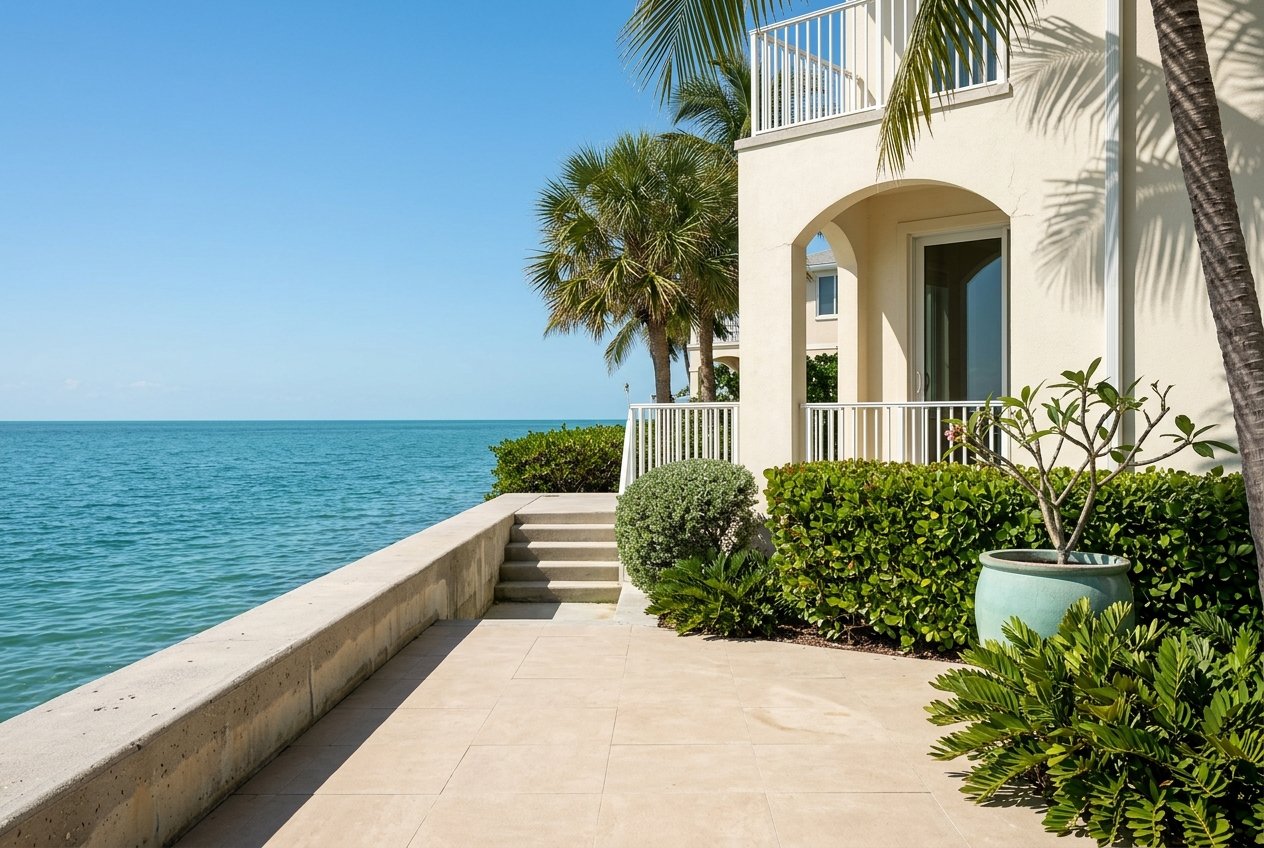
Picture this: you step into your backyard, untie the lines, and idle out to turquoise water in minutes. In Summerland Key, the type of dockage you have shapes that everyday experience and your property’s value. Choosing, evaluating, or upgrading dockage is not just a lifestyle decision. It is also about permits, environmental rules, and smart maintenance.
This guide breaks down common dock types, how permits work in Monroe County, what affects value, and the exact checks to make before you buy or sell. You will also get links to local agencies and a practical checklist to use right away. Let’s dive in.
Dockage types at a glance
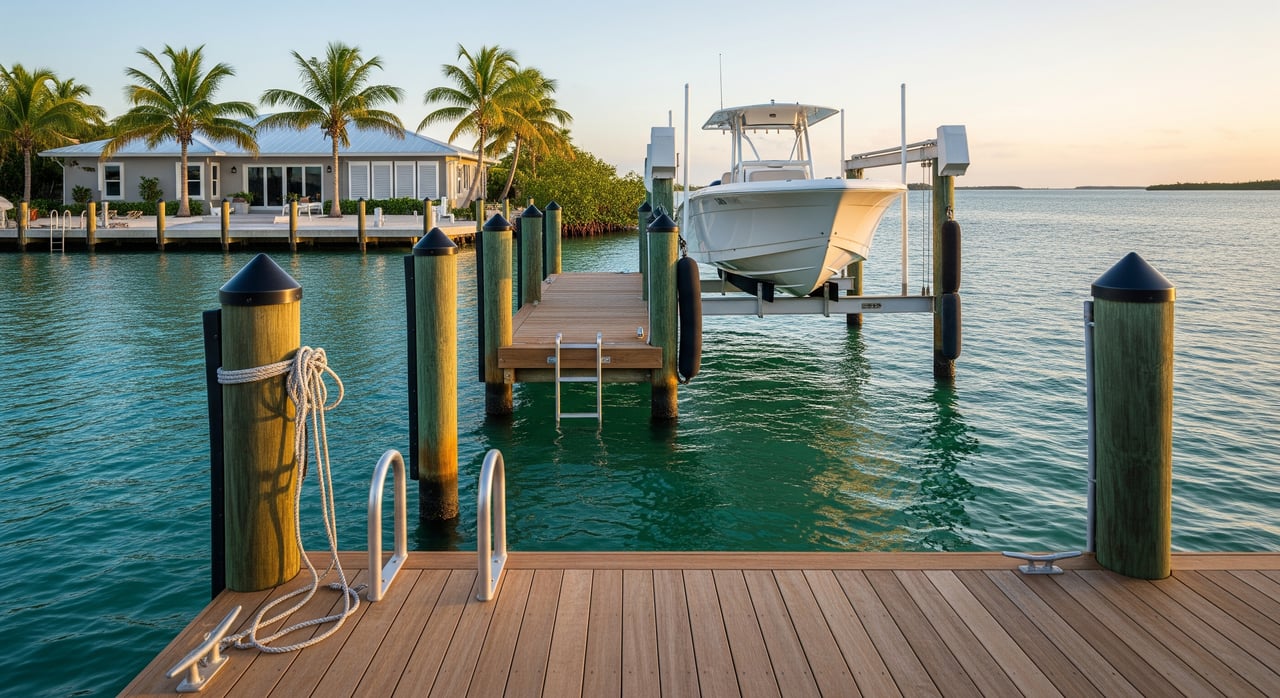
Fixed pile-supported docks
Fixed docks sit on driven piles and feel sturdy underfoot. They handle open-water exposure well and move very little when you load gear or step aboard. They usually cost more up front, and low, solid decking can shade seagrass if design and elevation are not addressed.
Best fit: permanent private docks and walkways to boat lifts where conditions allow piling installation and you want maximum stability.
Floating docks
Floating docks ride with the tide and tie to piles or anchors. They help where deep piles are not practical and make boarding easier as water levels change. In exposed areas they can feel less stable, floats have a service life, and very large vessels may not be a match.
Best fit: canal or protected settings with small to medium boats, especially if you use grated decking to reduce shading.
Finger and T-docks
Finger piers extend from a main walkway to create side ties, while a T-dock adds a cross piece at the end to serve boats on both sides. You maximize frontage and create more slip options. You need enough width and depth, and permitting can get more complex if you extend farther into the water.
Best fit: multi-boat households, larger private setups, or small residential compounds where space and water depth allow.
Pile moorings and piling-only setups
Pilings set in the seabed give you tie-off points without a full deck. You get lower cost and minimal shading footprint. Boarding is less convenient, and there is limited protection during rough weather.
Best fit: simple tie-off for experienced boaters who do not need a platform.
Boat lifts and davits
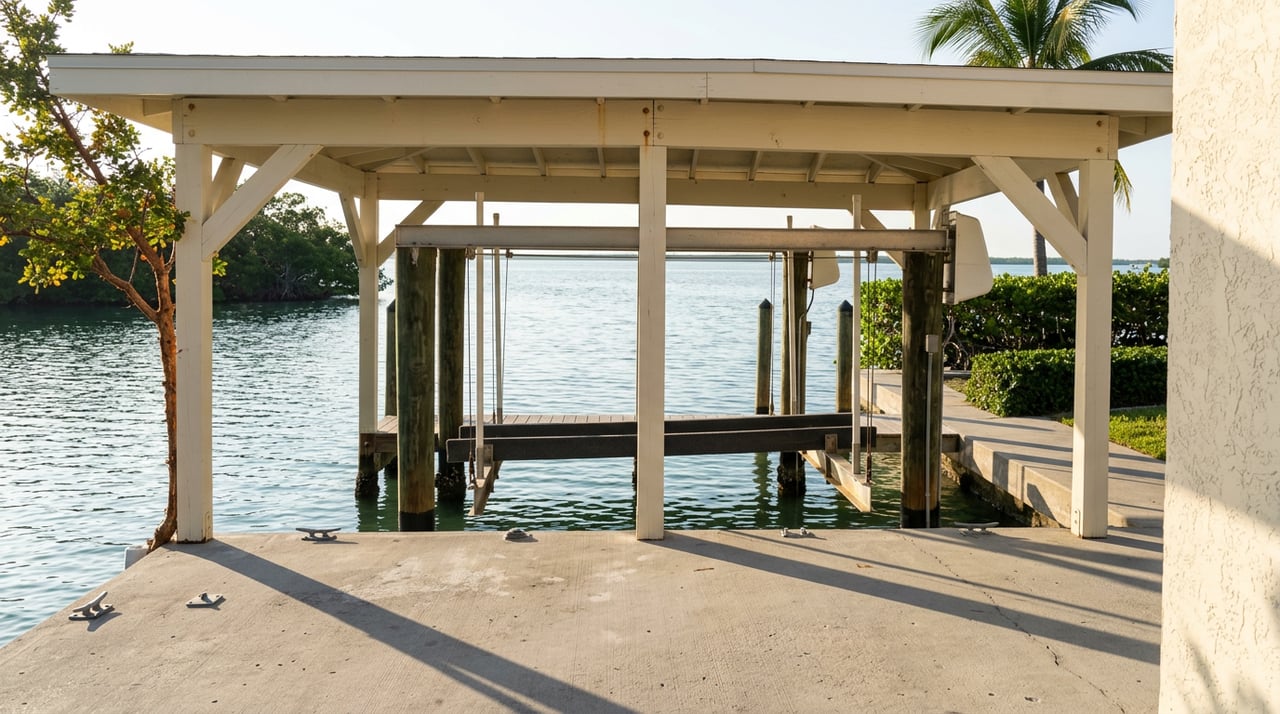
Lifts and davits raise your boat out of the water to reduce marine growth and wear. They require electrical power and regular maintenance. Many lifts need permits, and the cradle or structure adds shading that can matter over seagrass.
Best fit: owners who want cleaner hulls, faster launch, and storm-readiness when combined with a tie-down plan.
Mooring buoys
Mooring balls anchor a boat offshore without building over sensitive bottom. They can be essential near protected habitat. You will shuttle ashore by dinghy, and buoy placement can fall under sanctuary or agency restrictions.
Best fit: areas with sensitive habitat where a dock is not feasible or permitted.
Bulkheads and seawalls
Seawalls stabilize shorelines and protect upland property. They are common on developed islands. They can change local sediment movement and require maintenance and permits for repair or replacement.
Best fit: properties needing erosion protection or with existing seawalls that must be kept in good condition.
Marina slips
A private or commercial marina slip gives you protected berthing plus services like shore power, fuel, and maintenance. You avoid dock ownership and permitting on your lot. You pay mooring or lease fees and may face waitlists for prime locations.
Best fit: owners who want services and protection without building on their property.
What permits affect options
Several local, state, and federal authorities shape what you can build, replace, or expand. For local rules, start with Monroe County Planning & Environmental Resources. State authorization for work over submerged lands generally runs through the Florida Department of Environmental Protection. Federal permits for structures or dredging in navigable waters flow through the U.S. Army Corps of Engineers. The Florida Keys National Marine Sanctuary sets sanctuary-wide rules near coral reefs and sensitive habitats, and the Florida Fish and Wildlife Conservation Commission addresses manatee protection zones and boating rules.
Floodplain rules and elevation requirements also apply. Check mapping and guidance through FEMA and confirm electrical standards for marine equipment with local code.
Permit triggers to know
- New construction of docks, piers, seawalls, lifts, or davits.
- Replacement, enlargement, or substantial repair of an existing structure.
- Any dredging or channel deepening for boat access.
- Work that could impact seagrass, mangroves, coral, or hard-bottom areas.
- Placement of mooring buoys within sanctuary or protected waters.
Environmental constraints that matter
- Seagrass: protected throughout the Keys. Shading and physical impacts require avoidance, minimization, or mitigation.
- Mangroves: removal or trimming is regulated and often needs setbacks and mitigation.
- Coral and hard-bottom: construction and anchoring are tightly restricted near these resources.
- Protected species: manatees and sea turtles can drive timing and design conditions.
Typical steps and timing
- Confirm who owns the waterbed and your riparian rights. Get a survey showing the mean high water line and existing structures.
- Meet with Monroe County for pre-application guidance and local code checks.
- Determine if you need state and federal permits in addition to local approval.
- Provide environmental surveys, such as seagrass mapping or a benthic assessment, as required.
- Prepare for public notice or neighbor input, if applicable, and propose mitigation when needed.
- Plan for months, not days. Review times vary by project scope and environmental sensitivity.
Summerland Key purchase tips
Verify rights and records
Do not assume dock rights. Some properties carry deeded riparian rights, while others do not. Community docks may be owned in common with rules for use and transfer. Review the deed, plat, CC&Rs, and any easements before you call a dock “included.”
Ask for permits and as-built plans for any existing dock or lift. Confirm status with Monroe County and, when applicable, state and federal files. Unpermitted or nonconforming docks can complicate financing and insurance or require remediation.
Check condition, depth, and access
Order a current survey and a marine contractor inspection. Verify seawall integrity, pile condition, lift operation, and electrical systems. Confirm navigational access, including channel depth, draft limits, and any bridges or low-clearance crossings using NOAA resources and local knowledge. Check flood zones and Base Flood Elevations with FEMA and make sure marine equipment meets code.
Evaluate value drivers
A functional, properly permitted dock or deeded slip typically boosts marketability in the Keys. The premium depends on boat size the dock can handle, lift capacity, how quickly you reach deep water, and the quality and condition of the structure. Documented permits and maintenance history strengthen value.
Plan for insurance and liability
Ask your insurance agent how docks, lifts, and seawalls are covered. Underwriters look at materials, age, elevation of electrical components, exposure, and code compliance. Review liability coverage for accidents on the dock and make sure limits fit your risk tolerance.
Build a storm plan
The Keys see hurricanes. Consider marine-grade construction, elevated electrical, and tie-downs. Some owners remove or secure floating docks and lift cradles seasonally. Be ready with a pre-storm checklist and vendor contacts for post-storm inspections.
Cost, materials, and upkeep
Materials and durability
Piles commonly use treated timber, concrete, or steel. Each has trade-offs between corrosion resistance, lifespan, and cost. Decking options range from pressure-treated wood and tropical hardwood to composite or grated surfaces. Grated decking and higher pier elevations reduce shading over seagrass.
Floats are typically plastic or foam-filled and have a finite life due to UV exposure and wear. Use stainless or galvanized hardware and consider sacrificial anodes on metal components.
Maintenance and lifecycle
Schedule annual inspections to check fasteners, any pile movement, signs of rot or corrosion, and lift operation. Expect periodic recoating, board replacement, and float service over the years. After storms or king tides, inspect seawalls and bulkheads for undermining and scour.
Cost drivers to expect
Design complexity, water depth, bottom type, environmental surveys, mitigation, and construction access all move the budget. As a general order, piling-only tie-ups tend to cost less, then simple fixed docks, then floating docks, then lifts, and finally complex multi-slip docks with utilities and any project involving dredging. Always seek local contractor bids for accurate pricing.
Dredging caution
Dredging for deeper access is heavily regulated and often restricted near sensitive habitats. Approvals can take a long time and sometimes are denied. Discuss alternatives early with permit agencies and your marine contractor.
Design for fewer hurdles
To reduce regulatory friction and environmental impacts, minimize length over sensitive bottom, keep structures narrow, use grated decking, and avoid seagrass or coral whenever possible. Where feasible, shared or community docks can reduce total footprint.
Quick buyer checklist
- Confirm deeded riparian or dock rights and any recorded easements.
- Request permits and as-built plans for docks, lifts, and seawalls. Verify status with Monroe County and, if relevant, state and federal agencies.
- Order a recent survey showing the mean high water line and all structures.
- Hire a licensed marine contractor to inspect the dock and lift.
- Review navigational access and depth using NOAA charts and local guidance.
- Verify flood zone and Base Flood Elevation with FEMA data and check code requirements for marine electrical.
- Review any HOA or community dock rules for transferability, leasing, and maintenance.
- Ask for maintenance records, storm history, and recent repairs.
- Get written estimates for needed repairs, upgrades, or permit remediation.
How we help
Buying or selling waterfront in the Keys is about more than a view. You need clear answers on dock types, permits, and value. Our team pairs hyperlocal dockage knowledge with concierge service to help you verify rights and records, connect with trusted marine contractors, and position your property or offer with confidence.
If you are weighing dock options on Summerland Key or preparing a waterfront listing, let’s talk. Start your Keys journey with Island Welcome Real Estate.
FAQs
What dock type works best for a canal-front home in Summerland Key?
- In protected canals, floating docks or simple fixed docks are common choices. The right fit depends on water depth, bottom type, and whether you plan to add a lift. Confirm environmental constraints and permits before choosing a design.
How long do dock permits usually take in Monroe County?
- Timelines vary by project scope and environmental sensitivity. Expect months rather than days, especially if state and federal approvals and environmental surveys are required.
Can you add a boat lift to an existing dock?
- Often yes, but lifts typically require new permits and electrical that meets code. Design must account for shading, seagrass, and structural capacity of existing piles.
Are private mooring buoys allowed near my property?
- Mooring buoys can fall under sanctuary and agency rules. Placement is restricted in many areas to protect seagrass and coral. Check with the Florida Keys National Marine Sanctuary and local permitting offices first.
Do docks increase property value in the Florida Keys?
- A functional, permitted private dock or deeded slip often increases marketability. The premium depends on boat size capacity, access to deeper water, condition, and whether a lift is included.
What should I check before closing on a home with a dock?
- Verify permits and as-built plans, confirm riparian rights, get a marine inspection, review NOAA depth and access, ensure flood and electrical compliance, and evaluate insurance and HOA rules where applicable.